News
News from Quantanomous.
Programmes, pitches and events as we bring trustworthy materials discovery to industry, and our perspective on where the field is going.
All news
Follow us on LinkedInNovember 2026
- ·Event
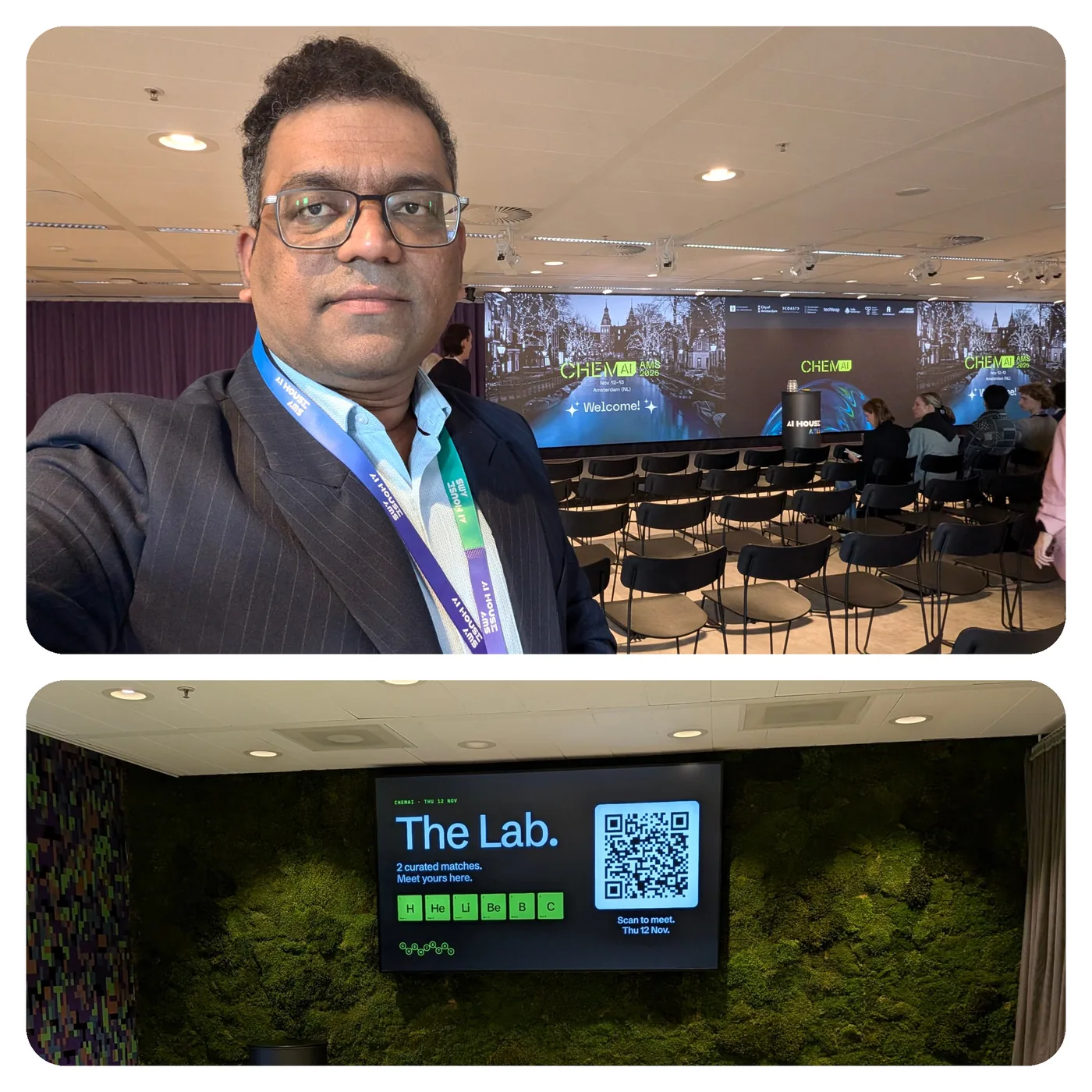
ChemAI in Amsterdam: AI for science is still up for grabs
Our co-founder Dr. Ravindra Shinde spent the builders day of ChemAI 2026 at AI House. Dealroom’s data placed AI for science among the few critical technologies that no region leads yet, and the day’s discussions turned on how Europe can win it.
AI House, Amsterdam · 12 November 2026
- ·Event
Quantanomous at ChemAI x Deep Tech Builders in Amsterdam
Dr. Ravindra Shinde joins the builders day of ChemAI 2026 at AI House, where founders, investors and industrial R&D leaders meet on the business of AI for chemistry and materials.
AI House, Amsterdam · 12 November 2026
October 2026
- ·Event
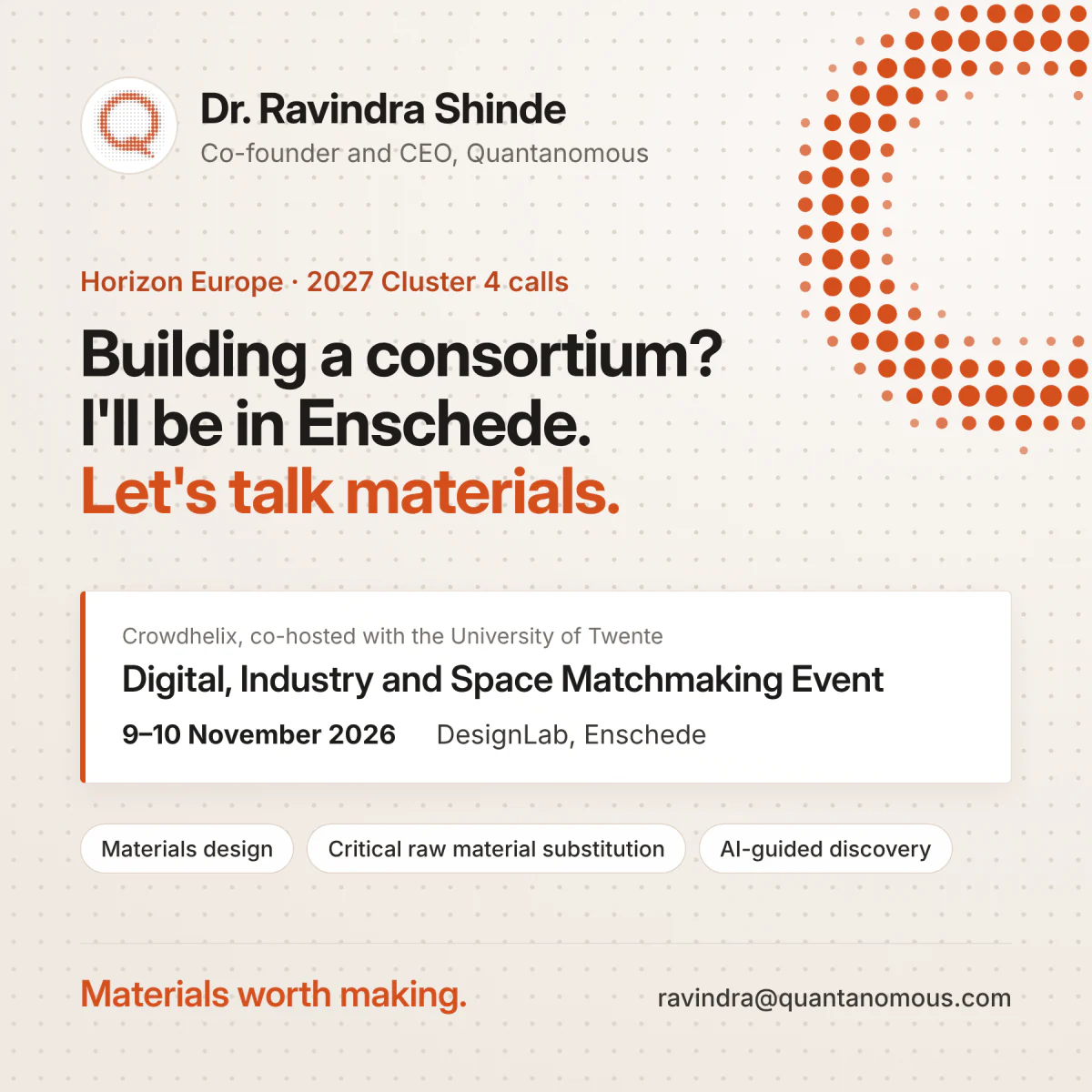
Looking for Horizon Europe consortia at Crowdhelix in Enschede
We join the Crowdhelix Digital, Industry and Space matchmaking event at DesignLab to meet coordinators and partners preparing proposals for the 2027 Cluster 4 calls.
DesignLab, University of Twente · 9–10 November 2026
- ·Perspective
The factory has its digital twin. The materials inside it need one too.
Siemens now trains factory inspection on a digital twin instead of waiting for prototypes. Materials R&D has the same problem, with one difference: its twin must predict what nobody has made yet.
- ·Programme
Selected for Google for Startups Immersion
Our co-founder and CEO, Dr. Ravindra Shinde, has been selected for Google for Startups Immersion, powered by Antler, the edition for founders across Europe, the Middle East and Africa building with AI at the core.

- ·Pitch
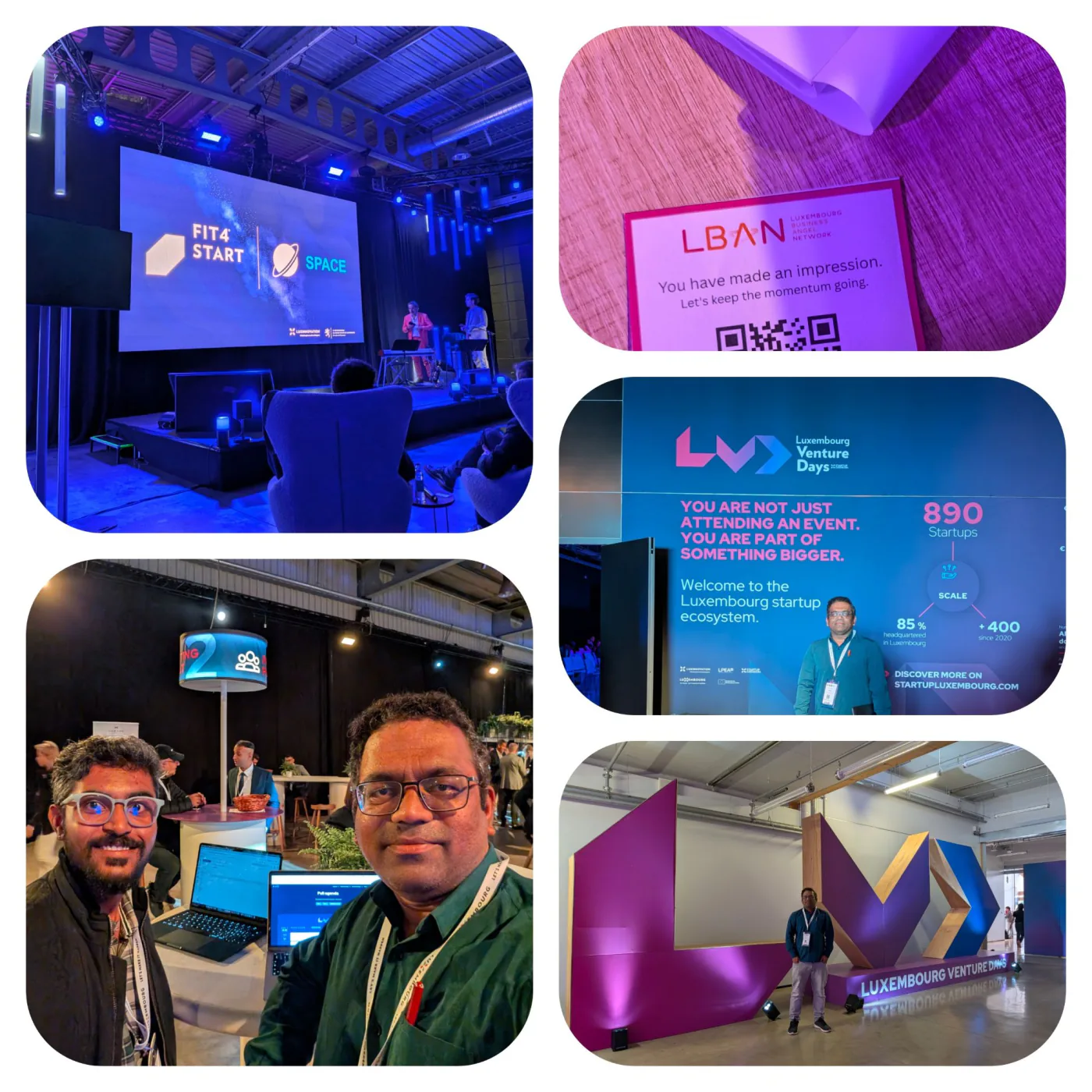
Four minutes in Luxembourg
Pre-selected from a record 556 applications, Quantanomous pitched at Luxembourg Venture Days and made the top 70 of Fit 4 Start, then spent two days meeting investors.
Luxexpo The Box, Luxembourg · 14–15 October 2026
- ·Perspective
More data isn’t the same as better data
A new preprint argues that the largest materials datasets are 99% redundant. It backs the way we build Quantanomous: fewer, well-chosen structures, computed with more accurate methods.