Design by properties
Describe the material. Get ranked candidates.
Set targets for hardness, transparency or cost, and say what to avoid. Quantanomous proposes compositions and ranks them by how well they fit.
Quantanomous turns the properties you need into materials that deliver them. It is built to learn from high-accuracy quantum mechanics, piezoelectric response included, so only the strongest candidates reach your lab, free of anything toxic, costly or scarce.
The app
From the first idea to a finished calculation, without switching tools. Six short films, one for each part of the app.
Films show the app with sample data.
Design by properties
Set targets for hardness, transparency or cost, and say what to avoid. Quantanomous proposes compositions and ranks them by how well they fit.
Assistant
Ask for a search, a design, a structure or a plot, and the assistant does it in the app. Calculations start only when you approve them.
Periodic table
See toxicity, price and supply risk on the table itself, and filter on them before you search.
Structure workbench
Symmetry, bonding, diffraction, electronic structure, elasticity and stability, one tab apart.
Calculations
Pick a method and the form builds itself. Follow every step live, wherever the job runs.
Workspace
Structures, densities, trajectories, data and notes, on your computer or your cluster, in panels you arrange your way.
Where we start
Piezoelectric ceramics turn pressure into an electrical signal and back again. They sit in medical ultrasound probes, sonar, driver-assist sensors and haptic screens, and behind the mirrors of the lithography machines that make chips, wherever a part has to move by nanometres. Most are made of lead zirconate titanate (PZT). In Europe that now has an end date: the exemption that allows lead in PZT expires on 31 December 2027.
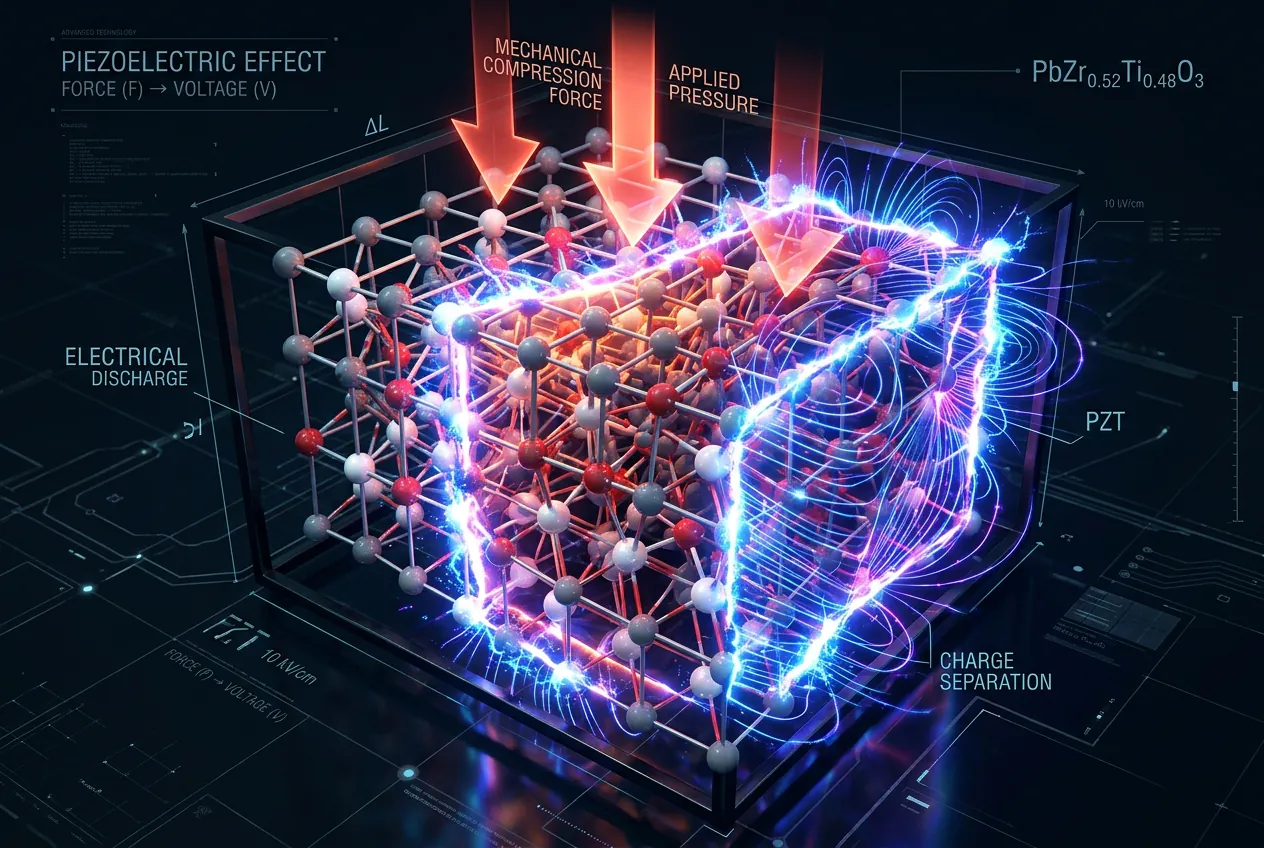
Taking lead out is only half the problem: the best-known substitutes depend on bismuth or niobium, raw materials the EU already ranks as strategic or critical. We are searching for compositions that match PZT’s response, hold it at working temperatures and don’t swap a toxic element for a scarce one.
Sources: Directive (EU) 2025/2363 · Emergen Research
Exclude lead with one click, and see each element’s supply risk before you search.
See at a glance whether a structure is centrosymmetric or polar.
Read the full stiffness tensor, its anisotropy and mechanical stability.
Send promising candidates to quantum-mechanical calculations on your own cluster.
On the roadmap

Light alloys that keep their strength when hot, for aircraft and vehicle parts.
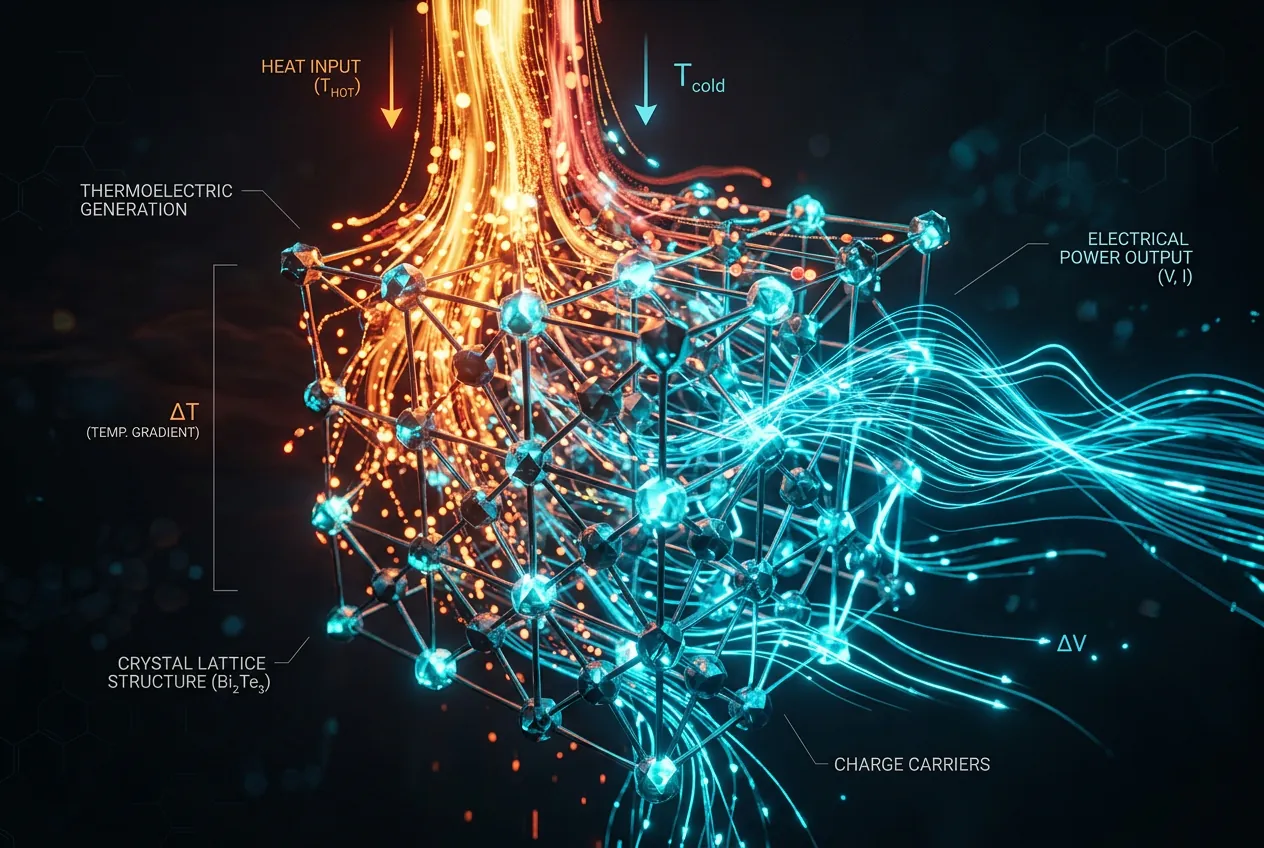
Crystals that turn the waste heat of engines and plants straight into electricity.

We are looking for partners to search for lead-free piezoelectrics with us: makers of medical ultrasound, sonar, automotive sensors, haptics, industrial ultrasonics, precision motion and semiconductor equipment. We also want to hear from teams in aerospace, automotive and energy with a materials problem to solve.