Team

The people behind materials worth making.

Quantanomous is led by scientists who have spent their careers on the hardest part of materials discovery: knowing which predictions to trust. Between us, high-accuracy quantum mechanics on Europe’s supercomputers, machine learning for materials, and ferroelectric ceramics made and measured in the lab.

Doctorates, in physics and chemistry
3
Doctorates, in physics and chemistry
Research institutions behind our methods
10
Research institutions behind our methods
Countries we have done research in
7
Countries we have done research in

Management team

The co-founders.

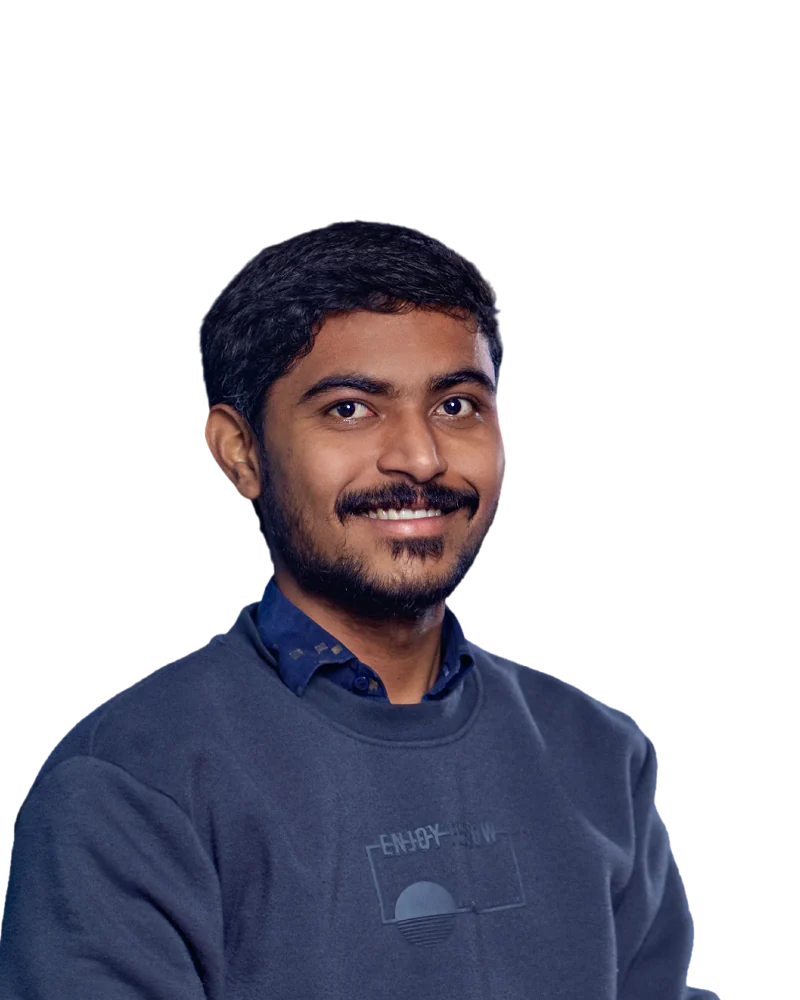
Dr. Ravindra Shinde

Co-founder · Chief Executive Officer

Dr. Ravindra Shinde

A computational physicist and quantum chemist who builds the high-accuracy methods our models learn from.

Ravindra has spent more than a decade computing how electrons shape the properties of molecules and materials, with methods well beyond standard density functional theory: quantum Monte Carlo, configuration interaction and self-interaction-corrected DFT, run at scale on Europe’s largest supercomputers.

He is a core developer of the open-source CHAMP quantum Monte Carlo code, contributed to TREXIO, a shared data format for quantum chemistry codes, and has produced benchmark-quality quantum Monte Carlo forces for training machine-learned force fields. His team’s EuroHPC project, Learning from Quantum Monte Carlo Forces, was awarded 75 million CPU hours on the LUMI supercomputer.

He holds a PhD in physics from IIT Bombay and did postdoctoral research at the Indian Institute of Science, the University of the Basque Country and the University of California, Riverside, before joining the University of Twente as a research scientist. He co-founded Quantanomous to take that accuracy out of academia and into the materials industry.

  • Quantum Monte Carlo
  • Electronic-structure theory
  • Machine-learned force fields
  • High-performance computing
  • Scientific software
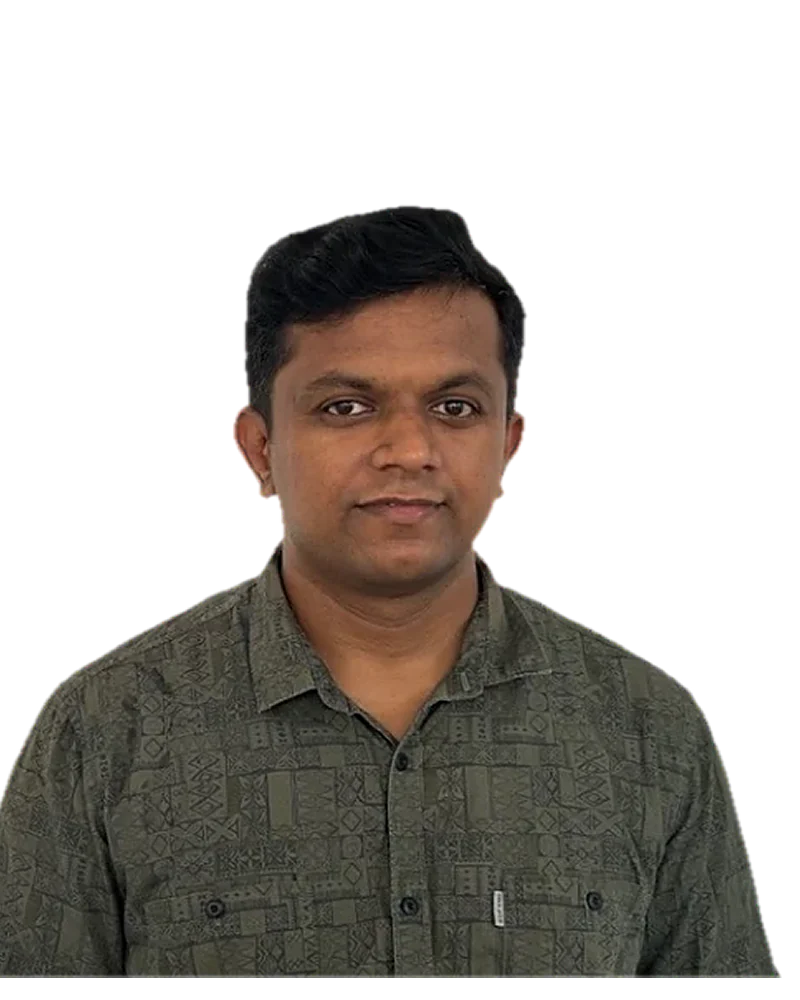
Dr. Suhas Yadav

Co-founder · Chief Scientist

Dr. Suhas Yadav

A materials chemist who leads our experimental science and validation, where predictions meet real ceramics.

Suhas works on ferroelectric and piezoelectric ceramics, the materials at the heart of our first market. His research spans both sides of the problem: predictive theory of how composition sets a ferroelectric’s properties, and the processing, poling and measurement that decide whether a ceramic performs on the bench.

At Bar-Ilan University he helped develop a predictive theory for domain walls in oxide ferroelectrics and a multilevel theory that predicts perovskite properties from composition, both in Advanced Materials, and used machine learning to predict the Curie temperatures of ferroelectric solid solutions. As a postdoctoral researcher at the University of Oulu in Finland, he works on eco-friendly piezoelectric ceramics, energy harvesting, AC poling and the recycling of piezoelectric composites.

He holds a PhD in chemistry. At Quantanomous he leads experimental science and validation: how candidate compositions are made, poled and measured, and how every result, failures included, feeds back into the models.

  • Experimental validation
  • Piezoelectric ceramics
  • Ferroelectrics
  • Lead-free materials
  • Poling and characterisation

Scientific Advisory Board

Independent eyes on our science.

Our advisors challenge the methods behind every prediction: how models are built, how their uncertainty is measured, and how results are validated.

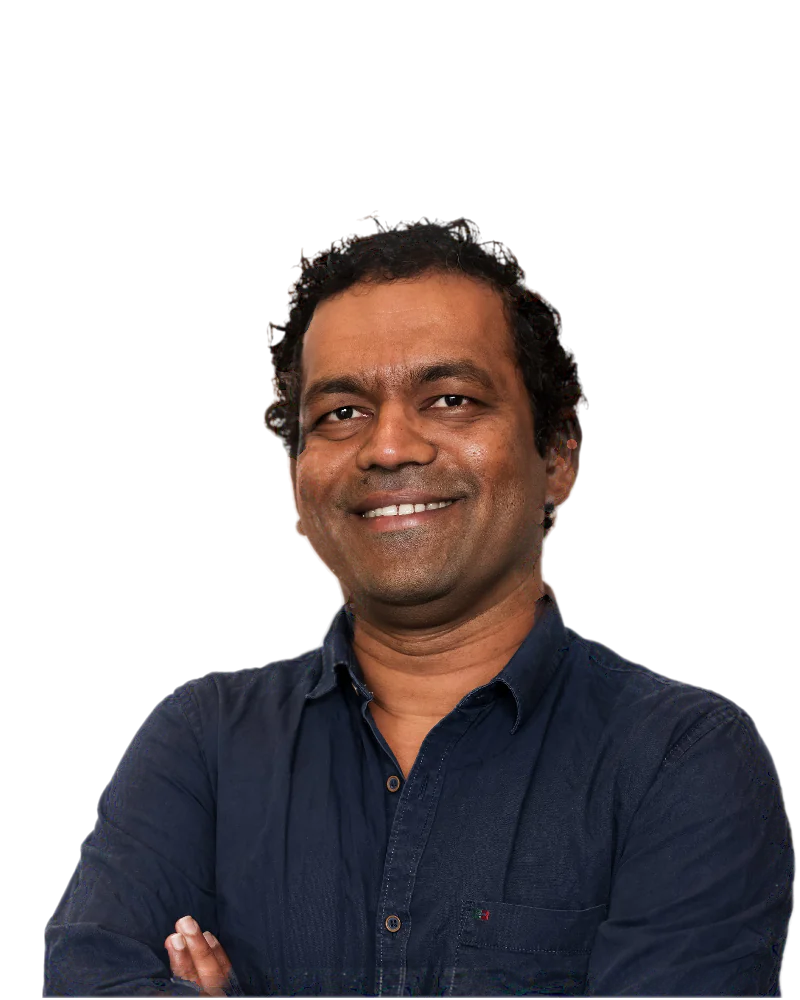
Dr. Arunkumar C. Rajan

Scientific Advisory Board

Dr. Arunkumar C. Rajan

A researcher in machine learning for materials, who advises us on the models between the physics and the lab.

Arunkumar works where machine learning meets materials chemistry. His first-author study at the Indian Institute of Science on machine-learning-assisted band-gap prediction for functionalised MXenes (Chemistry of Materials, 2018) has been cited more than 400 times.

At the Georgia Institute of Technology he worked on polymer informatics, including natural-language processing that extracts material property data from the literature at scale and physics-enforced neural networks for polymer properties. Today he is a research scientist at the Ulsan National Institute of Science and Technology (UNIST) in South Korea, working on machine-learned interatomic potentials for energy materials.

He earned his PhD in chemistry at POSTECH in South Korea. He advises Quantanomous on model design, uncertainty and validation.

  • Materials informatics
  • Machine-learned interatomic potentials
  • 2D materials
  • Polymer informatics

From electrons to ceramics

One team for the whole path from target to material.

  1. 01

    High-accuracy quantum mechanics

    Quantum Monte Carlo and other methods beyond standard DFT produce the reference data our models learn from, where cheaper methods are biased.

  2. 02

    Machine learning that knows its limits

    Models trained on fewer, better-chosen structures, with a calibrated uncertainty on every prediction, so lab time goes only where it is likely to pay off.

  3. 03

    Experimental science and validation

    Candidates are made, poled and measured, and every result, failures included, goes back into the models. That is what turns a ranked list into a ceramic that performs on a manufacturer’s line.

Work with us.

We are looking for industrial partners with a materials problem, laboratories to make and measure what we predict, and investors in European deep tech.